How Is a Coworking Office Different from Leasing a Traditional Office in the Tri-Valley Area?
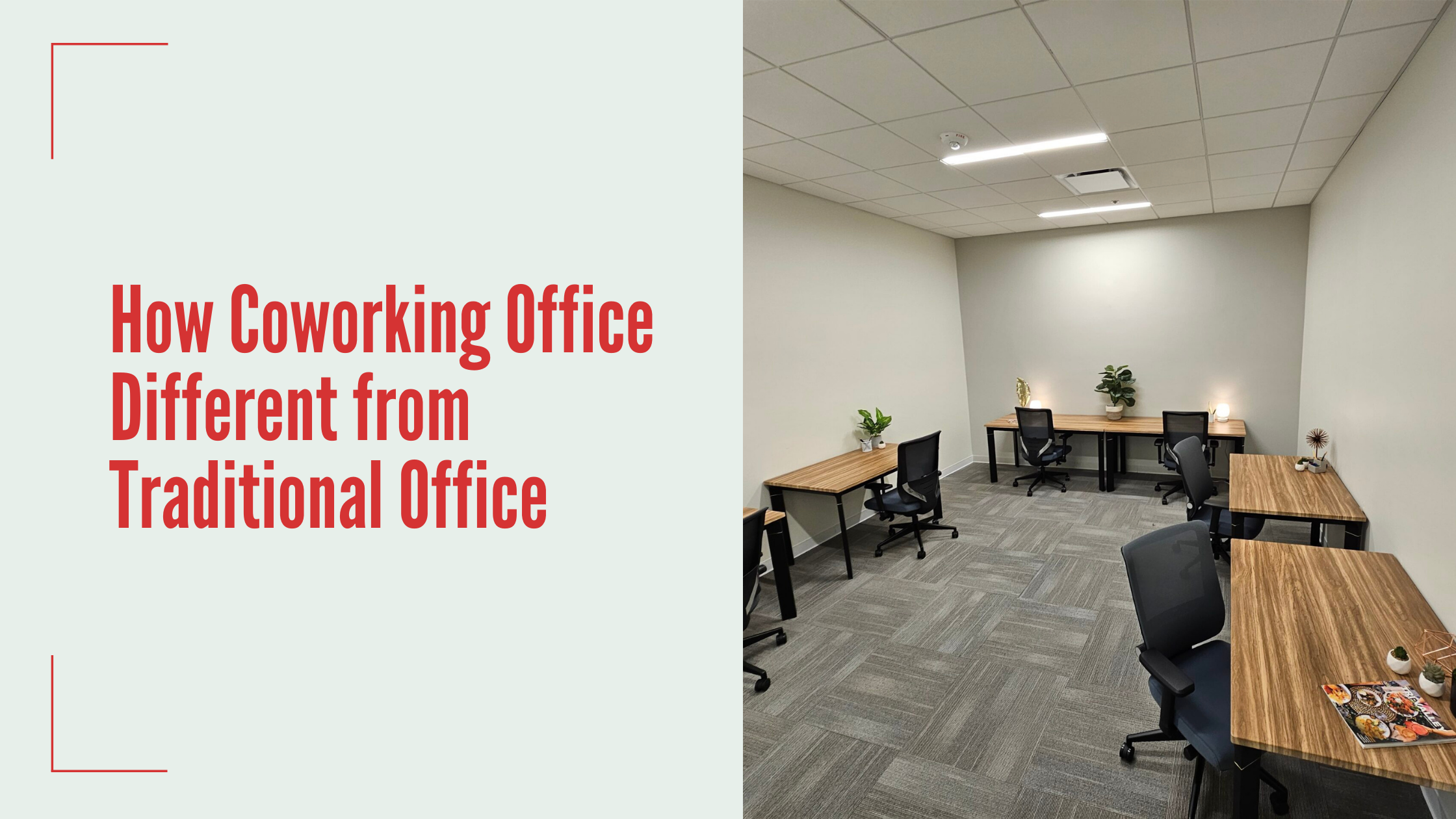
The main distinction between the coworking office and traditional office lease in the Tri-Valley debate is centered on flexibility, cost, and commitment. The main difference between a traditional office lease and a coworking office is that a traditional office is a contract that requires a significant upfront investment, while a coworking office is a short-term lease that is fully furnished and has all the utilities included. The Tri-Valley area, which includes Dublin, Pleasanton, San Ramon, and Livermore, is increasingly debating flexibility versus control in office space.
What Is a Coworking Office in the Tri-Valley Area?
The coworking space is a flexible workspace that is provided in Tri-Valley to businesses that require agility, speed, and a light administrative load.
Basic Characteristics of Coworking Offices
- Flexible memberships (monthly and short-term contracts)
- Offices and team rooms that are fully furnished
- Utilities included (electricity, water, HVAC)
- IT infrastructure and high-speed internet
- Access to meeting and conference rooms
- Reception services and mail handling
- Networking possibilities within the community
- Common facilities like lounges, kitchens, and breakout areas
Local Context
In areas like Dublin, Pleasanton, San Ramon, and Livermore, coworking providers cater to:
- Tech startups expanding from the Bay Area
- Professional service firms
- Consultants and remote teams
- Companies interested in having office facilities around the Dublin BART to be reachable by commuters
Coworking spaces enable firms to have their professional presence without the hassle of dealing with real estate management.
What Is a Traditional Office Lease?
A traditional office lease is a commercial real estate agreement wherein a business rents an exclusive office space under a long-term agreement.
Key Characteristics
- Contracts with commercial lease terms of 3-5 years (or more)
- Security deposits will be needed and advance payments
- Tenant improvement (TI) liabilities
- Furniture and interior setup handled by the tenant
- Utilities billed separately
- Maintenance and CAM (Common Areas Maintenance) fees
- Direct vendor management (cleaning, internet, repairs)
Review of coworking versus commercial lease has shown that the conventional route is more customized and has more control of branding, but demands more financial and operational dedication.
When business people are seeking office space to be leased in Tri-Valley, this option may be considered when they have some long-term requirements.
Side-by-Side Comparison: Coworking vs Traditional Lease in Tri-Valley
A detailed comparison is given below that illustrates the distinction between coworking and traditional office models:
| Feature | Coworking Office | Traditional Office Lease |
|---|---|---|
| Lease Length | Month-to-month or short term | 3–5+ year contract |
| Upfront Costs | Minimal deposit | Security deposit + build-out costs |
| Monthly Expenses | All-inclusive pricing | Base rent + utilities + CAM |
| Furniture | Included | Tenant purchases |
| Utilities | Included | Separate billing |
| Internet | Included | Tenant arranges service |
| Maintenance | Managed by operator | Tenant responsibility |
| Scalability | Easy to scale up/down | Limited flexibility |
| Customization | Limited branding | Full customization |
| Administrative Burden | Low | High |
A coworking vs. office lease cost analysis reveals that coworking will reduce initial investment and administrative expense. Conventional leases are flexible economically, stable, and brand-controlled in the long term, yet involve capital and operational costs. Coworking is flexibility-focused, whereas other leases are permanence and control-focused. The correct decision will lie in business maturity, business growth strategy, and financial strategy.
Cost Comparison in the Tri-Valley Area
A knowledge of the types of costs is necessary when comparing coworking and traditional office leases in Tri-Valley.
Upfront Costs
Traditional Lease:
- Security deposit (often multiple months’ rent)
- Build-out and tenant improvements
- Purchases of furniture and office equipment
- Legal and brokerage fees
Coworking:
- Minor security deposit or membership fee
- No build-out costs
- Furniture and infrastructure included
Ongoing Costs
Traditional Lease:
- Base rent
- Utilities (electricity, water, HVAC)
- Internet & telecom services
- Cleaning and janitorial services
- Maintenance & repair costs
- Parking fees
- Property taxes and CAM charges
Coworking:
- One predictable monthly payment
- Utilities and internet included
- Maintenance handled by the provider
- Shared cleaning services included
Though traditional leases might seem to be very competitive in a per-square-foot rate, there are other costs of operations that can make the overall costs of occupancy rise. Coworking is economical in costs and capital-wise.
Flexibility and Scalability Differences
One of the most crucial distinctions between coworking and traditional office models is adaptability.
Growing Teams
- Coworking enables companies to increase desks or team rooms within a short duration.
- The conventional leases could involve moving to bigger premises.
Downsizing
- Coworking memberships can be reduced with minimal penalties.
- Traditional leases often lock companies into unused space.
Hybrid and Remote Work Models
As hybrid work becomes standard, many companies avoid long-term commitments. Coworking supports flexible attendance patterns without long-term financial liability.
Ideal For:
- Startups needing runway preservation
- Professional services firms expanding regionally
- Tech companies testing new markets
- Consultants requiring part-time workspace
Decision-making should align with growth projections and workforce strategy.
Professional Image & Client Experience
Professional perception matters, especially in competitive markets like the Tri-Valley.
Coworking Offices Offer:
- Reception services
- Professionally designed meeting rooms
- Modern interiors
- Shared business community
Traditional Leases Offer:
- Complete branding control
- Dedicated private entrances
- Customized layouts
- Full corporate identity implementation
In the case of client-facing businesses, both models may equally provide professionalism; however, the approach is varied. Coworking is all about shared prestige and convenience, whereas traditional leases are all about brand autonomy.
Who Should Choose Coworking?
Best for:
- Startups: Limited capital and need for flexibility.
- Small teams (1–15 people): Avoiding large unused space commitments.
- Businesses testing the Tri-Valley market: Short-term presence before permanent expansion.
- Remote-first companies: Occasional collaboration space without long-term lease obligations.
- Fast-scaling companies: Quick expansion without relocation disruption.
Coworking reduces operational complexity while preserving agility.
Who Should Choose a Traditional Office Lease?
Best for:
- Established companies: Predictable long-term occupancy needs.
- Large teams: Economies of scale in leased square footage.
- Businesses requiring heavy customization: Specialized layouts, lab space, & secure facilities.
- Companies seeking long-term operational stability: Long-term and fixed-location brand presence.
Conventional leases are appropriate in business organizations whose growth is steady and whose financial projections are predictable.
Why Many Businesses in Tri-Valley Are Moving Toward Flexible Workspaces
There are a number of trends that can justify the increase in coworking in the Tri-Valley region:
1. Hybrid Work Culture: Employees demand flexibility. Businesses require flexible space requirements.
2. Economic Uncertainty: Financial risk is lessened when short-term commitments are made.
3. Capital Efficiency: Maintaining cash flow to grow the business as opposed to investing in real estate.
4. Faster Setup Time: Coworking spaces may be started in days, unlike traditional leases, which take months to start planning.
5. Reduced Administrative Burden: Operators take care of facilities management, utilities, and vendor coordination.
Since businesses consider coworking against commercial lease, most of them find that flexibility is more in line with the demands of the modern workforce.
Conclusion
The decision between coworking and a traditional lease ultimately reflects a balance of flexibility vs control, cost transparency vs long-term commitment, and short-term agility vs permanent infrastructure.
When you are considering the possibility of having a flexible office in Tri-Valley, you should consider visiting a workspace to determine whether it suits your business requirements. Dublin Technology Center Workspaces offers luxurious office spaces and team rooms for lease as a premium environment, with flexibility for organizations seeking a professional setting that adapts to changing business needs.
Ready to find the right workspace for your business?
Schedule a tour at Dublin Technology Center Workspaces and discover luxurious office spaces and team rooms designed to support your growth in the Tri-Valley area.