Why Startups Are Choosing Coworking Instead of Traditional Office Leases
The Trap of Long-Term Lease Commitments
Your startup just closed its seed round. Eighteen months of runway, maybe twenty if you’re careful. And then someone on your team says, “We should get a real office.”
Here’s the reality: a “real office” usually means a commercial lease. Three to five years, signed, sealed, delivered. Before you’ve even nailed down product-market fit.
Think about that math for a second. You don’t know what your headcount looks like in six months. You don’t know if your next round closes on schedule. But a landlord wants you locked in for sixty months anyway.
Why would any startup do that to itself?
Some don’t. That’s the whole story here: a growing number of Tri-Valley founders and ops leads are walking away from rigid commercial real estate and choosing flexible startup office space instead. Not because it’s trendy. Because the math actually works better.
CapEx vs. OpEx: The Hidden Math Behind Startup Workspaces
Let’s talk numbers, the ones nobody puts in the glossy leasing brochure.
A traditional commercial lease isn’t just rent. It’s:
- Tenant improvement costs (buildout, electrical, HVAC modifications)
- Furniture and fixtures, purchased outright
- Security deposits, often three to six months upfront
- Ongoing utilities, janitorial, and facilities maintenance
- IT infrastructure you have to design and install yourself
Add it up and a modest office buildout can eat a meaningful chunk of a seed round before a single employee sits down at a desk. I’m not going to hand you a precise industry-wide average here. Buildout costs swing wildly by square footage, location, and finish level, and you should get a real quote for your specific space before budgeting against any number you read online.
What I can tell you with confidence: every dollar sunk into carpet, cubicles, and conference room AV is a dollar that isn’t going toward engineering hires or your next product sprint.
That’s the CapEx trap. Turnkey startup office space flips the model. Instead of capital expenditure, you get operating expense: a predictable monthly line item instead of a five-figure buildout bill. Desks, internet, meeting rooms, reception. Already there. Already working.
“The cheapest square footage is the square footage you never had to build.”
That’s not a famous quote from anyone in particular, just a way to frame the tradeoff. However, it’s the tradeoff that matters most when your board is asking about burn rate.
Flexibility as a Growth Strategy: Scaling Up Without Relocating
Startups don’t grow in straight lines. You hire four people in a good quarter, then freeze for two. A traditional lease doesn’t bend with you. It’s the same square footage whether you have six employees or sixteen.
A flexible model solves this differently. Start on a hot desk. Move to a dedicated suite when the team outgrows shared seating. Add a private office when you need a door that closes for board calls. No re-signing a five-year lease. No moving trucks. No renegotiating with a landlord who knows you’re stuck.
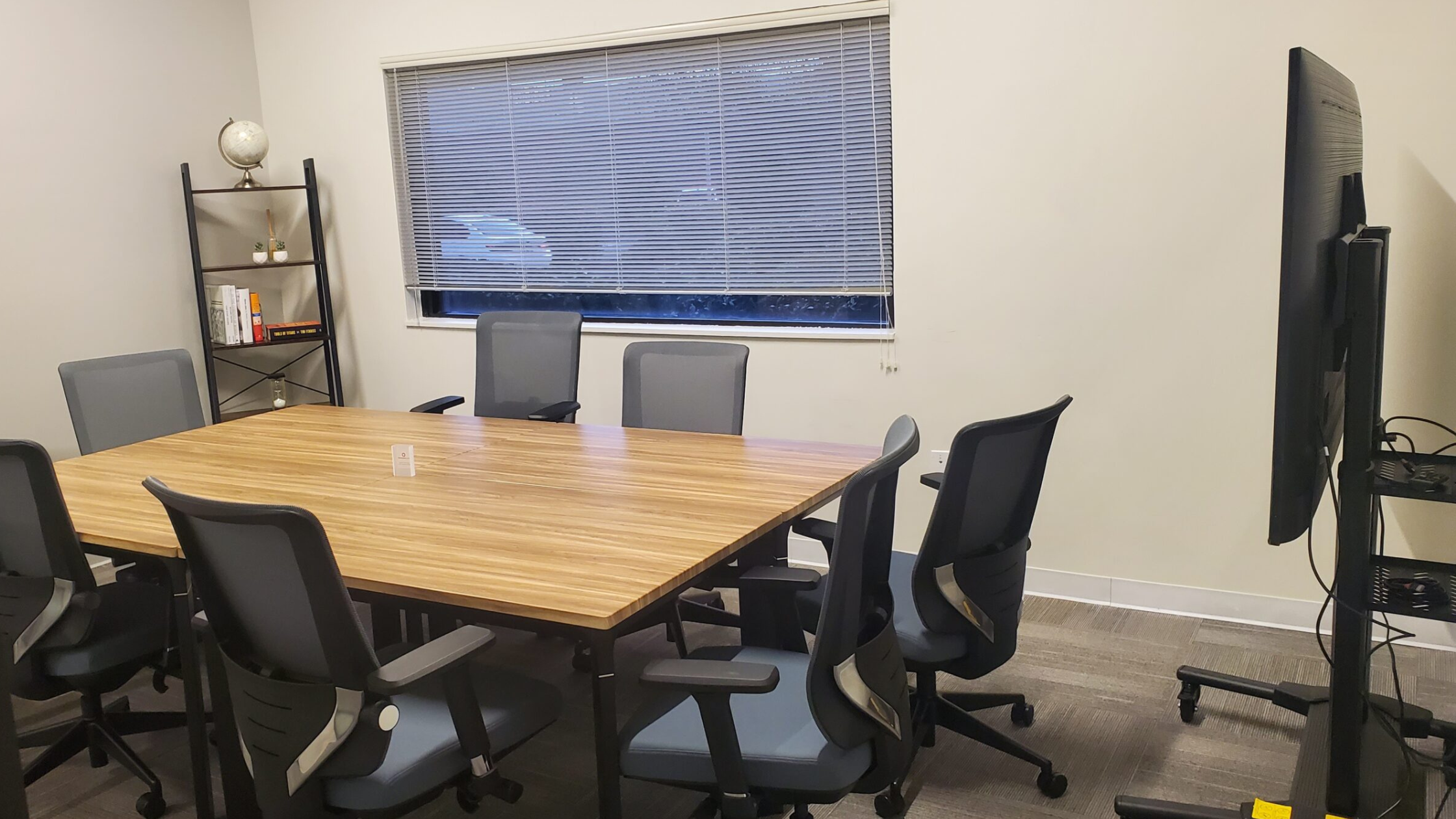
This is where a proper Coworking Office Space earns its keep: boardrooms already wired for video calls, café lounges for the informal conversations where half your best ideas actually happen, and fiber connectivity that doesn’t buckle when your whole team is on Zoom at once.
Compare that to the alternative: signing a long lease for the office you’ll need in eighteen months, then paying for empty desks until you grow into it. That’s not efficient. That’s dead capital sitting in a floor plan.
A coworking office space in Dublin California setup lets your square footage track your headcount instead of guessing it, years in advance.
Strategic Location Advantage: Why Dublin, CA Beats Traditional Commutes
Location matters more than most founders admit until they’re the ones stuck explaining a bad commute to a candidate they want to hire.
Dublin sits right at the I-580/I-680 interchange, genuinely one of the more connected spots in the East Bay. Add BART access and you’ve got a location that works whether your team lives in Pleasanton, Livermore, San Ramon, or further out toward the Central Valley. That’s not a small thing when you’re trying to recruit engineers who don’t want a two-hour round trip.
Compare the options available to a growing team. You could go the traditional route with standard office space for rent in Dublin, functional, but often still locked into rigid terms. Or you could look at something leaner, like a virtual office in pleasanton, for teams that need a professional mailing address and occasional meeting space without full-time square footage.
Office space for rent Dublin CA searches are trending upward for a reason. Founders want the commute convenience without the long-term liability.
Traditional Lease vs. Dublin Tech Center Coworking
Sometimes the clearest argument is the simplest one. Here’s how the two models actually stack up:
| Factor | Traditional Commercial Lease | Dublin Tech Center Coworking |
| Lease Term | 3–5 years, fixed | Month-to-month or short-term, flexible |
| Upfront Cost | Security deposit, TI buildout, furniture | Move-in ready, minimal upfront spend |
| Facilities Management | Tenant’s responsibility | Handled by the workspace provider |
| Scalability | Fixed square footage | Scale desks up or down as headcount shifts |
| Infrastructure | Self-installed IT and connectivity | High-speed fiber and IT already in place |
| Exit Flexibility | Locked in, subletting is a hassle | Adjust or exit terms without a landlord fight |
Look at that middle row again: facilities management. Nobody starts a company because they wanted to become a part-time property manager. Yet that’s exactly what a traditional lease turns you into.
Next Steps: Choosing an Agile Future for Your Team
None of this means traditional office space is wrong for every company. A firm with a stable, predictable headcount and deep enough capital reserves might do fine with a long-term lease. However, if you’re a startup founder or ops lead trying to stretch runway, protect capital, and keep the option to scale up or down without a legal fight, flexible startup office space is built for exactly that uncertainty.
The Tri-Valley market has enough options that you don’t have to guess. Tour a space. Sit in the conference room. Test the Wi-Fi with your whole team on a call at once. See if it actually fits how your company works day to day.
Dublin Technology Center is set up for exactly that kind of evaluation. No five-year commitment required to find out if it’s the right fit.
Ready to see it for yourself? Schedule a tour of Dublin Technology Center and find out what your team could do with the capital you’re not spending on a buildout.